The world of live event video production is experiencing explosive growth in 2026, as brands and creators strive to captivate audiences both in person and online. Hybrid and virtual events have become the new norm, pushing organizers to rethink how they deliver engaging, memorable experiences.
This guide is designed to help you master live event video production in today's fast-evolving landscape. You'll discover the latest trends, must-have equipment, step-by-step workflows, and strategies to overcome common challenges.
As technology and expectations continue to rise, you can stand out by adopting proven techniques and expert insights. Ready to elevate your next event? Keep reading for practical tips and future-proof solutions.
Live Event Video Production in 2026: Trends and Industry Evolution
The world of live event video production is transforming at lightning speed. In 2026, audiences crave more than just a front-row seat—they want to be part of the action, no matter where they are. As global participation soars, event organizers are reimagining engagement to keep viewers glued to their screens and invested in every moment.
Shifting Audience Expectations and Engagement
Audiences in 2026 expect real-time connection. Features like live polls, interactive chat, and Q&A sessions are now standard for live event video production. Hybrid events have blurred the line between physical and virtual attendance, unlocking global participation at unprecedented levels.
Did you know that 67% of event organizers have reported a surge in virtual attendance? TED Conferences, for example, use live feedback and on-demand access to boost interaction and create a sense of community far beyond the venue walls.
Technology Advancements Shaping Production
Technology is the heartbeat of modern live event video production. AI-powered automation now handles camera switching, editing, and even live translations, slashing response times and reducing human error. With 4K and 8K streaming, AR overlays, and immersive audio, viewers experience every detail as if they were there in person.
Integration with event apps enables instant content delivery and engagement, while AI and Workflow Automation in Live Production is streamlining workflows and scaling productions effortlessly.
Monetization and Brand Building Opportunities
Monetization is thriving in live event video production. Ticketed streams, sponsorship overlays, and branded content are unlocking new revenue streams for organizers. Apple’s Keynote events are a standout, blending global reach with seamless sponsor integration that feels natural and valuable.
Brands now use live events as storytelling engines, building loyalty and amplifying their messaging in real time to audiences worldwide.
Sustainability and Accessibility Focus
Sustainability is no longer optional. Eco-friendly production practices—like LED lighting and remote crews—are helping reduce carbon footprints. Accessibility is at the forefront, too, with captioning, multi-language streams, and user-friendly platforms ensuring everyone can participate in live event video production.
This dual focus is driving the industry to be more inclusive and responsible, making events greener and accessible to all.
Data-Driven Decision Making
Data is the secret weapon in live event video production. Real-time analytics reveal audience engagement, content performance, and retention rates, empowering teams to make smarter decisions on the fly.
Heatmaps, viewer retention stats, and rapid feedback loops help optimize every aspect of production, ensuring each event is more effective and memorable than the last.
Example Snapshots
Leading organizations are redefining what’s possible. Coachella’s multi-angle live streams and interactive features pull fans into the heart of the festival. Charity: Water’s emotionally-charged fundraising events use live testimonials and instant donation features to drive action.
These real-world examples showcase how creative approaches to live event video production can spark engagement, inspire action, and create unforgettable shared experiences.
Essential Equipment and Technology Stack for 2026
The foundation of unforgettable live event video production in 2026 is built on cutting-edge equipment and tech. Imagine standing backstage, knowing every camera, microphone, and streaming encoder is primed for action. The right gear transforms ordinary moments into extraordinary experiences, captivating both in-person and remote audiences.

Cameras and Imaging Solutions
Cameras are the storytellers’ eyes in live event video production. In 2026, mirrorless 4K and 8K cameras dominate, delivering crisp visuals and cinematic depth. PTZ (pan-tilt-zoom) cameras, controlled remotely, offer flexibility for hard-to-reach angles.
Large events like esports championships and music festivals rely on multi-camera setups. This approach captures every reaction, from the roar of the crowd to the subtle gestures of speakers. Popular choices include the Sony FX-9 for its dynamic range and the Blackmagic ATEM family for seamless camera switching.
A quick comparison:
| Camera Type | Resolution | Remote Control | Use Case |
|---|---|---|---|
| Mirrorless | 4K/8K | No | Main stage |
| PTZ | 4K | Yes | Overhead/audience |
Choosing the right camera mix ensures live event video production meets both creative and technical demands.
Audio Systems and Clarity
Sound is the emotional core of any live event video production. Wireless lapel and headset microphones provide mobility for presenters, while ambient mics capture crowd energy.
Audio mixers balance multiple sources, delivering a clear and immersive soundscape. For instance, at corporate summits, boom mics ensure panel discussions remain crisp, even in large venues.
Key audio essentials:
- Wireless lapel/headset mics for presenters
- Boom mics for group capture
- Audio mixers for real-time balancing
A single audio hiccup can break immersion, so prioritize reliable gear and always monitor live feeds.
Lighting Innovations
Lighting shapes the mood and visual clarity of live event video production. In 2026, LED panels with app-based controls allow real-time adjustments for color and intensity. Battery-powered rigs add mobility for outdoor or pop-up venues.
Softboxes help diffuse harsh lights, creating flattering looks for speakers and performers. Adapting to varied venue lighting is crucial. For example, corporate events often blend natural and artificial light, so versatile gear is essential.
Lighting checklist:
- LED panels with wireless control
- Portable, battery-powered kits
- Softboxes for gentle diffusion
Thoughtful lighting ensures every frame looks professional and engaging.
Streaming, Encoding, and Connectivity
Reliable streaming is the lifeline of live event video production. Hardware encoders like the ATEM Mini Pro offer plug-and-play stability, while software solutions such as OBS Studio provide flexibility for custom workflows.
A high-speed, redundant internet connection is non-negotiable. For remote locations, 5G and satellite solutions like Starlink keep the stream alive. Integration with platforms such as YouTube Live, Vimeo, and Twitch expands reach and audience participation.
Streaming essentials:
- Hardware/software encoders
- Redundant, high-speed internet
- Platform integration for global access
Fail-safe streaming technology brings your event to viewers everywhere.
Video Switchers and Real-Time Graphics
Live event video production thrives on dynamic visuals. Video switchers enable seamless transitions between camera feeds, keeping the broadcast engaging.
Adding real-time branded overlays, lower thirds, and sponsor logos personalizes the experience. For instance, award shows use graphics to introduce nominees and highlight sponsors.
Features to look for:
- Multi-camera switching capabilities
- On-the-fly graphics insertion
- Customizable overlays and branding
These tools help tell your story with flair and professionalism.
On-Site and Remote Production Tools
Modern live event video production often involves distributed teams and hybrid workflows. Cloud-based editing platforms and instant file-sharing apps allow crews to collaborate in real time, even from different continents.
Event media apps let you deliver highlight clips and photos to attendees instantly. For deeper insights into how hybrid and cloud-based workflows are transforming the industry, explore The Future of Live Production: Hybrid Workflows in 2026.
Key remote tools:
- Cloud editing and storage
- Real-time media sharing apps
- Remote collaboration platforms
Hybrid production tools empower flexibility and rapid response to changing event needs.
Backup and Redundancy Systems
No live event video production is complete without robust backup plans. Uninterruptible power supplies keep systems running during outages, while duplicate recordings and backup internet connections prevent data loss.
At high-profile broadcasts like The Oscars, parallel systems are standard to avoid catastrophic failures.
Backup essentials:
- Power supply redundancy
- Duplicate media storage
- Secondary internet options
A strong safety net ensures your production stays on track, no matter what.
Every piece of equipment in your live event video production stack is a character in your story. When chosen and managed with care, these tools elevate every moment, ensuring your event captivates and inspires audiences around the world.
Step-by-Step Guide: Flawless Live Event Video Production Workflow
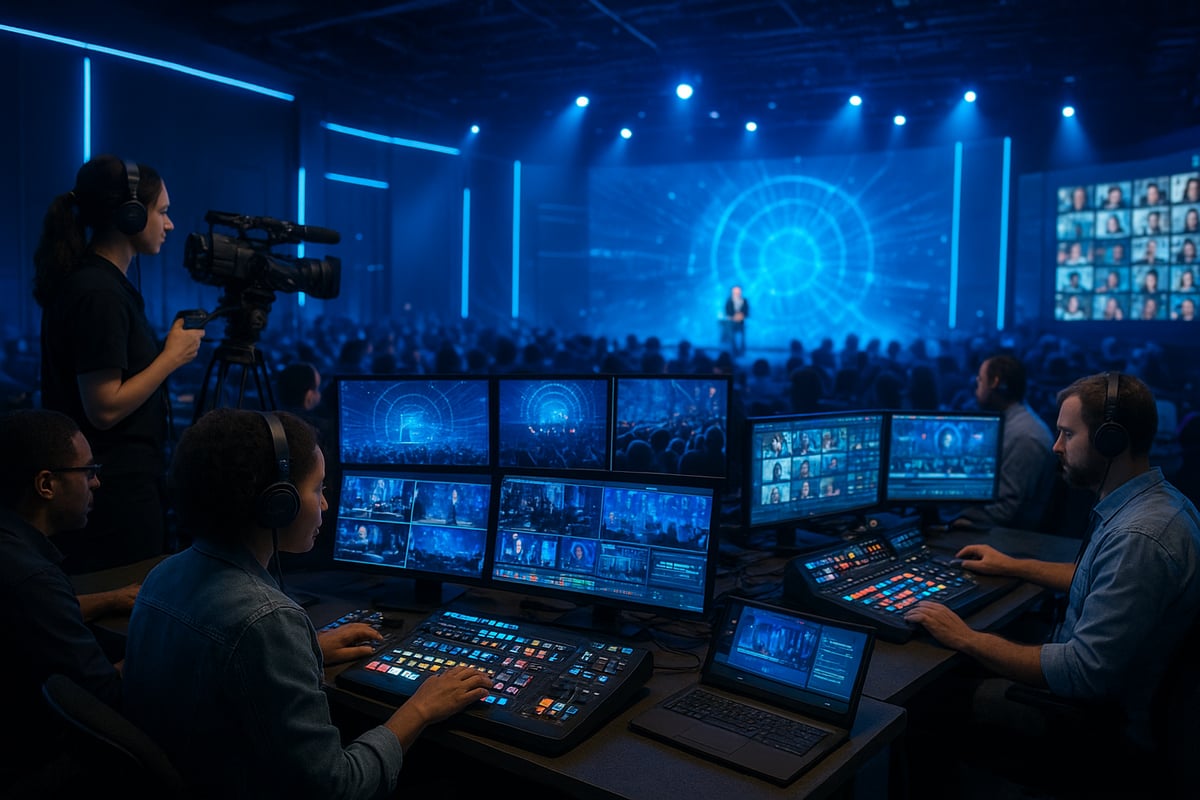
Imagine stepping behind the scenes at a major global conference. The hum of anticipation, the buzz of coordinated teams, and the precision of every camera angle set the stage for an unforgettable experience. This is the reality of live event video production in 2026, where flawless execution is both an art and a science. Here’s your roadmap to mastering every step, from concept to final cut.

Step 1: Defining Event Objectives and Audience
Every successful live event video production starts with a crystal-clear vision. Gather your stakeholders—clients, marketing teams, or nonprofit organizers—and ask: What story do we want to tell? Who is our audience, and what matters most to them?
For example, a corporate product launch demands high-energy reveals and brand messaging, while a fundraising gala may focus on emotional storytelling and donor engagement. Setting these objectives guides every technical and creative decision.
According to Event Marketing Trends 2026, live experiences are becoming indispensable for brand strategy. Aligning your goals with these trends ensures your live event video production resonates and delivers measurable impact.
Step 2: Pre-Production Planning and Logistics
With your objectives in place, dive into the details. Pre-production is where live event video production truly takes shape. Scout venues for camera placements, lighting opportunities, and internet connectivity. Develop detailed shot lists and a run-of-show document so every moment is mapped out.
Coordinate closely with speakers, performers, and technical crews. Send out schedules, scripts, and checklists. Use tables to organize logistics:
| Task | Responsible | Deadline |
|---|---|---|
| Venue walk-through | Producer | 2 weeks out |
| Shot list approval | Director | 10 days out |
| Crew briefing | Tech Lead | 3 days out |
Clear planning up front saves hours of troubleshooting later and keeps your live event video production on track.
Step 3: Equipment Preparation and Technical Rehearsals
Now, gather your gear. Create a comprehensive checklist—cameras, mics, switchers, backup batteries, and cables. Double-check every item. In live event video production, redundancy is your best friend.
Conduct technical rehearsals with your full team. Test camera feeds, audio clarity, and internet speed. Simulate live conditions by running through the entire show. Spot glitches before the audience ever sees them.
Here’s a sample code block for a technical run-through checklist:
- Camera feeds: tested and labeled
- Audio inputs: balanced and clear
- Streaming encoder: configured and connected
- Backup internet: operational
- Intercom/headsets: all channels working
This attention to detail transforms anxiety into confidence on event day.
Step 4: On-Site Setup and Crew Coordination
Arrive early and set up your command center. Position cameras according to your floor plan, connect audio sources, and configure lighting for the venue’s unique needs. Assign specific roles: director, camera operators, audio engineers, graphics operator, and floor manager.
Communication is key. Equip your team with wireless headsets or intercoms for instant updates. Review the run-of-show together, clarifying cues and transitions. In live event video production, a well-coordinated crew is the backbone of a seamless broadcast.
Consider using a table to clarify roles:
| Role | Person Assigned |
|---|---|
| Director | Sam |
| Camera 1 | Alex |
| Audio Engineer | Priya |
| Graphics | Jordan |
Step 5: Live Production and Real-Time Enhancements
Showtime! As the event unfolds, your team springs into action. Multi-camera coverage captures speakers, audience reactions, and the ambiance that brings the event to life. The director calls camera switches, the graphics operator adds branded overlays, and the audio engineer keeps every word crisp.
Engage your audience with live polls, chat, or Q&A sessions. Monitor stream health and resolve any hiccups instantly. In live event video production, adaptability is as important as planning.
Keep your audience at the edge of their seats by weaving in interactive moments and dynamic angles.
Step 6: Content Capture and Instant Sharing
While your event streams live, capture every second for future use. Record backup copies and use event media apps to deliver highlight clips and photos in real time.
Instant sharing keeps social media buzzing and extends your reach beyond the venue. A well-executed live event video production multiplies its value by creating assets for marketing, training, or donor outreach.
Leverage cloud-based tools for seamless collaboration between on-site and remote editors, ensuring your best moments are ready to share before the applause fades.
Step 7: Post-Event Editing and Distribution
When the lights dim, the work continues. Edit full sessions and highlight reels to maximize audience engagement. Repurpose footage into bite-sized social clips, training modules, or promotional teasers.
Distribute on-demand content across YouTube, Vimeo, and private portals. This keeps your message alive and accessible long after the event. Analytics reveal what resonated most, informing your next live event video production.
A strong post-production plan turns a single event into a library of evergreen content.
Example: Apple’s Meticulous Event Planning and Flawless Execution as a Gold Standard
Apple’s legendary product launches set the bar for live event video production. Their workflow is a masterclass in precision—months of planning, exhaustive technical rehearsals, and a team that functions like a symphony.
From seamless live switching to cinematic visuals, Apple’s broadcasts engage millions worldwide. Their secret? Relentless attention to detail, robust backup systems, and a deep understanding of their global audience.
Let Apple’s example inspire your team to aim higher at every step of your own live event video production journey.
Overcoming Common Challenges in Live Event Video Production
Live event video production is a high-stakes arena, where even the smallest hiccup can ripple through the entire show. Every production team faces obstacles, but the difference between good and great lies in preparation, adaptation, and a relentless focus on quality. Let’s explore the most common challenges and how to conquer them, so your next event can unfold seamlessly and leave a lasting impression.

Technical Glitches and Redundancy Planning
No matter how advanced your setup, technical issues can strike at any moment during live event video production. From sudden connectivity drops to power failures, the risks are real. The best teams prepare for the unexpected by building in layers of redundancy: backup internet (like 5G or satellite), duplicate recording devices, and uninterruptible power supplies.
Consider the Oscars, where every second counts and parallel systems are in place to prevent broadcast interruptions. Staying updated with 5 Stadium AV Trends to Watch in 2026 can introduce you to the latest in immersive visuals and fail-safe AV solutions, which are critical for live event video production. Always have a technical support specialist on site, and run full rehearsals to catch issues before they go live.
Managing Multi-Camera and Crew Complexity
With multi-camera setups and a large crew, coordination is both a challenge and an art form in live event video production. Assign clear roles: director, camera operators, audio engineers, and graphics specialists. Use detailed shot lists and real-time communication tools such as headsets or intercoms.
A well-rehearsed team moves like a symphony, each member knowing their cues and responsibilities. Hold pre-event meetings to align everyone, and use visual cues or digital run sheets to keep the production on track. This harmony transforms complexity into precision.
Lighting and Audio Variability
Venues are unpredictable, and lighting or audio can shift in an instant. Portable LED lighting kits and wireless microphones are essential tools in live event video production. Always scout your venue in advance, noting natural light sources, electrical access, and potential acoustic challenges.
Bring softboxes for gentle, diffused lighting, and ambient microphones to capture crowd reactions. A quick adaptability checklist helps: test every mic, adjust lighting for camera exposure, and monitor audio levels throughout the event. This vigilance ensures your production looks and sounds professional.
Engaging Remote and Hybrid Audiences
Hybrid events are here to stay, and keeping remote audiences engaged is a unique challenge in live event video production. Leverage interactive features like live chats, polls, and Q&A sessions. Integrate social media feeds or event apps to foster a sense of participation, no matter the viewer’s location.
TED Conferences excel at this, using real-time feedback loops and live Q&A to create a feeling of community. The key is to treat your remote audience as VIPs, giving them multiple ways to interact and feel heard.
Budget Constraints and ROI Considerations
Budget often dictates what’s possible in live event video production, but creativity can stretch every dollar. Prioritize must-have equipment, such as reliable cameras and audio gear, and choose versatile solutions like all-in-one switchers or software encoders.
Repurpose your footage for marketing, training, or future events to maximize ROI. Here’s a quick comparison:
| Budget Tip | Impact |
|---|---|
| Multi-use gear | Saves cost, increases flexibility |
| Cloud workflows | Reduces travel, boosts collaboration |
| Highlight reels | Extends content life |
Smart planning turns budget limitations into opportunities for innovation.
Legal, Privacy, and Accessibility
Legal and ethical considerations are vital in live event video production. Always secure rights for music, speaker appearances, and participant consent before going live. Ensure your streams are accessible by adding captioning, multi-language options, and using platforms that meet accessibility standards.
This not only broadens your audience but also builds trust and credibility. Keep a checklist for permissions and accessibility features to avoid surprises.
Stress Management and Real-Time Problem Solving
Live event video production is fast-paced, and stress can run high. Cultivate a calm, solution-focused mindset. Designate a troubleshooter who can rapidly address issues as they arise. For example, at Coachella, contingency planning covers everything from weather to technical glitches, ensuring the show goes on.
Encourage open communication among your crew, use checklists to stay organized, and remind everyone to take short breaks. The ability to remain composed and adaptable is often what separates a memorable event from a forgettable one.
Real-World Success Strategies and Case Studies
What does it take to achieve legendary status in live event video production? The answer lies in learning from the world’s most iconic events and the teams behind them. Let’s travel behind the scenes of industry leaders who have set new benchmarks, inspired audiences, and transformed the way brands approach live event video production.
Apple Keynote Events: Precision and Global Reach
Apple’s keynotes have become a masterclass in live event video production. Every frame is meticulously planned, with seamless live switching that keeps viewers engaged from the first moment. Their cinematic approach, combining sharp visuals and immersive sound, builds anticipation and excitement worldwide.
A key to Apple’s success is integrating sponsor branding and interactive demos that feel natural, never forced. Their ability to synchronize live presentations with global online audiences sets the gold standard for live event video production. For inspiration, you can explore Apple Events.
Coachella Music Festival: Multi-Stage Streaming Excellence
Coachella’s approach to live event video production is all about scale and connection. The festival streams multiple stages simultaneously, offering fans a choose-your-own-adventure experience. Multi-camera setups capture artists, crowds, and behind-the-scenes moments, giving viewers a true sense of presence.
Interactive features like real-time chat and artist interviews turn passive viewers into active participants. Coachella’s commitment to dynamic coverage and global access demonstrates the power of live event video production to unite music fans everywhere.
TED Conferences: Educational Impact and Accessibility
TED’s live event video production strategy focuses on clarity, accessibility, and impact. Professional multi-angle filming ensures every speaker’s message is captured with emotion and detail. Live graphics, captions, and translations make content accessible for global audiences.
Their on-demand distribution model extends the lifespan of every talk, reaching millions after the event. TED’s attention to both visual storytelling and accessibility highlights the inclusive potential of live event video production.
The Oscars: Red Carpet to Awards Show Perfection
The Oscars are a showcase of flawless live event video production under immense pressure. From the red carpet arrivals to the dramatic award reveals, every transition is seamless. Redundant systems, parallel recordings, and backup streams ensure the show goes on, no matter what.
Dynamic camera work and live graphics keep the audience engaged, while split-second decision-making by the crew ensures perfection. The Oscars exemplify how live event video production can deliver unforgettable moments on a global stage.
Charity: Water Fundraisers: Emotional Storytelling
Charity: Water’s events prove that live event video production can drive real-world change. Their fundraisers feature live testimonials, interactive donation tools, and high-quality visuals that tug at the heartstrings. Emotional storytelling encourages participation, turning viewers into passionate supporters.
Key Takeaways from Industry Leaders
Here’s what the best in live event video production have in common:
| Strategy | Example Event |
|---|---|
| Seamless pre-event planning | Apple, The Oscars |
| Dynamic multi-camera coverage | Coachella, TED |
| Real-time audience engagement | Coachella, Charity: Water |
| Accessibility and inclusivity | TED, Charity: Water |
| Redundancy and technical backup | The Oscars, Apple |
Learning from these leaders, anyone can elevate their live event video production and captivate audiences worldwide.
Future-Proofing Your Live Event Video Production Strategy
Looking ahead, the path to success in live event video production is about more than just keeping up with trends. It is about building a foundation that adapts, innovates, and thrives as technology and audience expectations evolve. To truly future-proof your approach, you need to embrace new tools, strategies, and mindsets that will carry your productions forward.
Embracing Emerging Technologies
The future of live event video production is intertwined with the rise of AI-driven automation. Imagine cameras that auto-track speakers or software that instantly translates dialogue for global audiences. These tools are no longer futuristic—they are becoming standard.
AR and VR integration is also gaining traction, letting viewers join hybrid events in immersive ways. By exploring these technologies, you can create experiences that are not just watched but truly felt. If you want to see how AI is changing events, check out how AI transforms live streaming.
Building Scalable, Flexible Production Systems
Growth often means handling more events, bigger audiences, and more complex setups. Cloud-based workflows are now essential, enabling remote collaboration and instant content sharing anywhere in the world.
Modular equipment setups make it easy to scale up or down, so you are always ready for anything. Investing in these systems ensures your live event video production can meet the demands of any client or audience.
Fostering Community and Real-Time Engagement
Creating a sense of community is vital for lasting impact. Event apps now allow for instant media sharing, live polls, and Q&A, connecting participants in real time.
Branded experiences that extend beyond the event itself keep audiences talking and sharing. Your live event video production should focus on building these meaningful interactions, turning viewers into lifelong fans.
Data-Driven Content Optimization
Analytics are the secret weapon of modern live event video production. Real-time feedback helps you adjust on the fly, while post-event data reveals what truly resonates.
Heatmaps, viewer retention stats, and instant surveys guide both creative and technical decisions. By making data a central part of your workflow, you set the stage for continual growth and improvement.
Sustainability and Social Responsibility
Eco-friendly production choices matter more than ever. LED lighting, remote crews, and digital workflows reduce your carbon footprint without sacrificing quality.
Accessibility is just as important. Captioning, multiple language streams, and user-friendly platforms open your event to everyone, creating a more inclusive experience.
- Use LED lighting for energy savings
- Choose remote teams to cut travel
- Ensure all streams offer captions
Continuous Learning and Industry Networking
Future-proofing is a journey, not a destination. Stay ahead by joining industry networks, attending conferences, and learning from peers.
Collaboration with innovative partners brings new ideas and keeps your skills sharp. The world of live event video production is always evolving, and those who keep learning will lead the way.
As you imagine your next big event, picture the energy of a connected audience, the excitement of real-time sharing, and the long-lasting impact of stories captured with heart. We’ve walked through the evolving world of live event video production together—from breakthrough tech and instant content delivery, to building genuine community and unforgettable experiences. If you’re ready to bring your vision to life with purpose and creativity, let’s connect and explore how we can elevate your event for 2026 and beyond. Book a discovery call

Subscribe to our newsletter
We will keep it short and relevant, once a month... and soon we will replace the newsletters!